2026-08-11
Donate page as a ledger
Most donation pages hide the books. A visitor sees a mission sentence and a button. They do not see whether last month’s costs are covered, whether the org is sitting on unused cash, or what “enough” even means.
A better ask treats the donate page as a ledger: current balance, the minimum required to keep the service running, an as-of date, and the work that money pays for — then the button.
The pattern (Transparency HOA)
Transparency HOA’s Analyze Queue (a 501(c)(3) founded in 2019) puts the ask on the same page as the work queue.
As captured in 2026, the page states that the Analyze service costs about $6,000 per month, shows an Analysis Fund balance ($7,881 as of 30 April 2026), and keeps Donate Now on that same view. Below the fund, a pending list names the associations waiting for analysis.
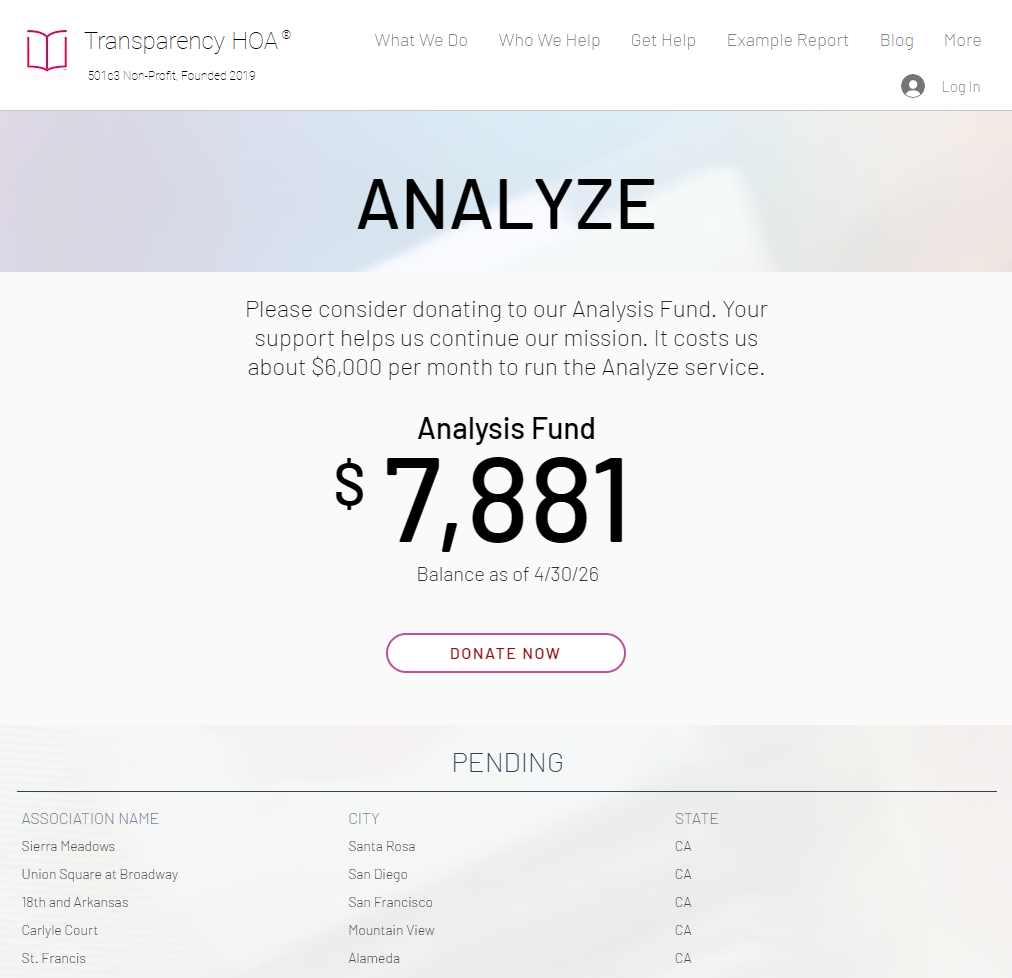
Screenshot of the public Analyze Queue page. Used here as a cited example of an on-site fund ask. Source: transparencyhoa.org/analyze-queue.
The numbers will change. The design lesson does not: cost + balance + date + ask + work, on one page, under the org’s own brand.
What to put on the page
-
Floor — the minimum to stay in operation for the period you actually run (monthly burn for a service, quarterly for a slower program). Say what the number includes.
-
Balance or raised — cash on hand for that fund, or amount raised toward a campaign. Label which it is.
-
As-of date — stale totals destroy trust faster than no totals.
-
Ask — donate (or sponsor) in the same view. The payment processor can still be Stripe, Open Collective, or a fiscal host; do not exile the story to a blank third-party form.
-
What the money buys — a queue, a milestone list, a public budget line. Visitors should see work, not only a thermometer.
A goal amount is useful when you are filling a campaign. A floor is more honest when the real question is “can this keep running next month?” You can show both: floor as the line you must not fall under, goal as the next useful surplus.
Why this beats a generic donate button
-
Trust — published numbers beat “please support our mission.”
-
Urgency without theater — a balance near the floor is a reason to give; a surplus is also honest (the example above was above one month of burn).
-
Ownership — the ask stays on your site. Hosted fundraisers are fine as the checkout rail, not as the only page a donor ever sees.
This works for 501(c) organizations and for donation-supported products or OSS projects. The legal wrapper changes the tax receipt; it does not change the UX.
What not to fake
-
Do not invent a burn rate. If you do not know monthly cost, publish a smaller true number (hosting only) rather than a rounded “we need $X.”
-
Do not hide a large reserve behind a crisis headline.
-
Do not copy another org’s dollar figures into your own page.
-
Tax deductibility, fiscal-host fees, and charitable status are jurisdiction-specific. This guide is a page pattern, not legal or accounting advice.
Related
-
DevCentr funding map (channels: fiscal hosts, grants, sponsorships): Business Bootstrap · Funding
-
Short ideas list (same screenshot, pointer back here): Donation and monetization ask ideas